
HOLY METROPOLIS OF CHALKIS
ISTIAIA & THE NORTHERN SPORADES
ISTIAIA & THE NORTHERN SPORADES
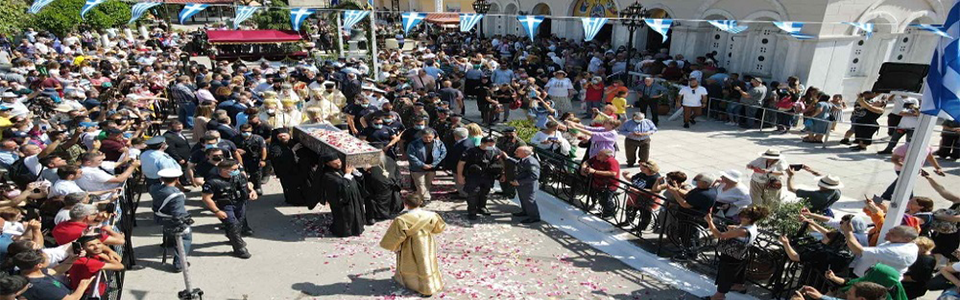
"The Polystaphylos Istiaia"
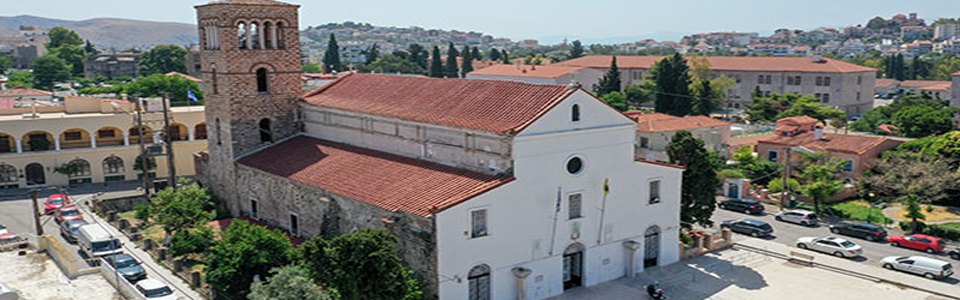
In the northern part of Euboea, almost in the middle of the largest plain of the area, about 5 kilometers away from the sea, lies the town of Istiaia, which has a population of 4,125 inhabitants according to the 2001 census. Istiaia is the seat of the homonymous Municipality and constitutes the dominant settlement of the entire Municipality of Istiaia. The area and the town of Istiaia have a long history that is lost through the centuries.
Traces of life have been observed during the Neolithic period, and it is also mentioned by Homer as "polystaphylos" during the Trojan War in which it participated. Later, during the Persian wars in 480 BC, Istiaia was plundered by the troops of Xerxes after the naval battle of Artemisium. After the end of the Persian wars, the cities of Istiaia joined the "Athenian League" until 446 BC when they revolted. This revolt was severely punished by the Athenians of Pericles, who imposed harsh penalties. Over 2,500 inhabitants of Istiaia were exiled to Thessaly, and their land was distributed to the Athenians. The next period of prosperity for Istiaia appears from 350 BC after the dominance of the Macedonians in the Greek area and in 310 BC with the favor shown to the area by Demetrius the Besieger, the entire area experienced its best era until then in its history. However, with the appearance of the Romans and the decline of the Macedonians, the area became deserted, and this situation persisted during the Byzantine years, the Venetian rule, and most of the Ottoman rule.
 Istiaia, under the name "Xirochori," is mentioned again in its current location around 1750. In 1821, the first battles for the independence of Euboea took place in Istiaia, and on May 8, 1821, it was the first city in Euboea to gain its freedom, and in 1833 it was annexed to the new Greek State along with the entire Euboea and became the seat of the province that included almost the entire Northern Euboea. Subsequently, in the first decade of the 1900s, many inhabitants of Istiaia participated in the Macedonian Struggle with several casualties. With the Asia Minor catastrophe in 1922 and the population exchange, many refugees found refuge in Northern Euboea and the area of Istiaia and played a significant role in the cultural and economic development of the place. In modern history, the inhabitants of the Istiaia area took an active part in the national resistance against foreign occupiers.
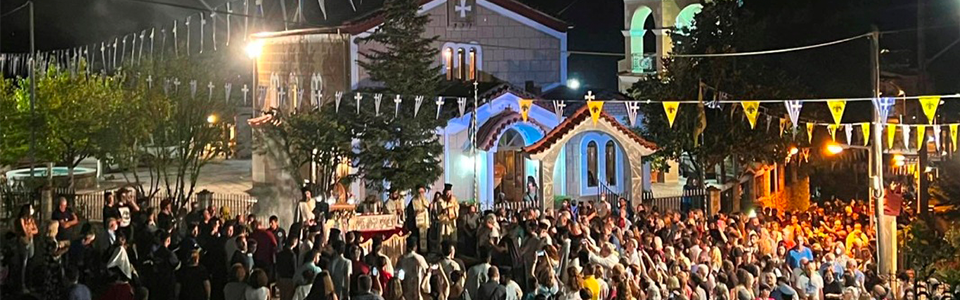
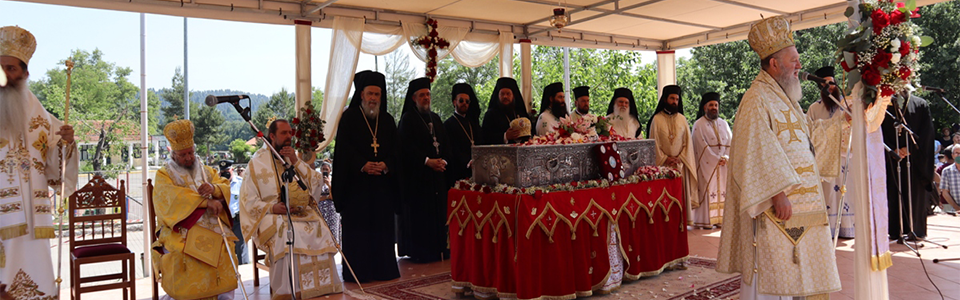
 Istiaia has three Parishes: the Dormition of the Theotokos, which is the Metropolitan Church of the city, Saint Athanasios, who is the patron saint, and the Evangelistria.
It is also noteworthy that among these larger churches, there are also smaller chapels, oratories, and picturesque country churches.
Cultural Infrastructure
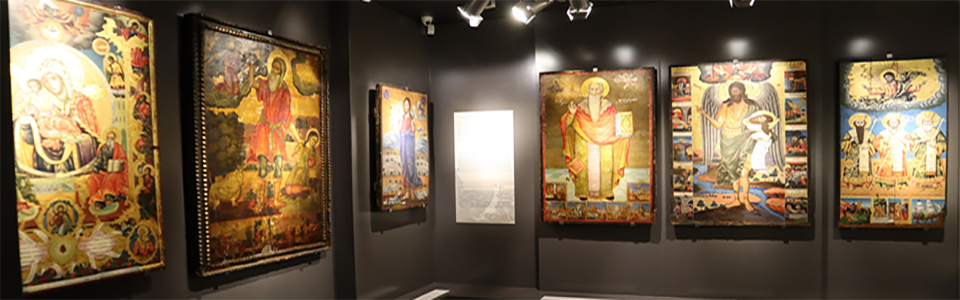
On the eastern side of the city, next to the Municipal Stadium, is the "Istiaia Natural History Museum," which belongs to the Istiaia Hunting Club. The Museum is very interesting with exhibits from the natural history of the place and many taxidermied species of the animal kingdom.
At the northern end of the city is the small but remarkable Folklore and Historical Museum housed in the facilities of the Municipal School.
At the southern end of the city, near the Old Town Hall and the Courts, is the historic chapel of St. Nicholas with very interesting frescoes (those that remain).
Next to the Church of the Evangelistria is the Spiritual Center of the Church where various educational events, lectures, parent schools are held, and the local branch of the Byzantine Music School of the Holy Metropolis operates there.
Archaeological Sites
The cultural/architectural/historical environment of the Municipality of Istiaia does not have significant archaeological sites to present. However, there are several monuments within and outside the settlements that fall under the jurisdiction of the 1st Ephorate of Byzantine Antiquities and concern various churches that have survived to this day, as well as the Ephorate of Modern Monuments of Attica, which concern preserved buildings and works of art.
Specifically, the most notable churches that  are located in the Municipality of Istiaia are:
The Church of Saint Nicholas, a three-aisled wooden-roofed basilica of the post-Byzantine period with frescoes. It is located within the city of Istiaia in the southern part near the Peace Court. It is an old cemetery church that retains part of its fresco decoration from the 14th – 15th century.
The Church of the Nativity of John the Baptist, also known by the nickname Riganas or Kleidonas. From the ruin, a part of the eastern wall with part of the apse that preserved a fragment of an undiagnosed fresco and the Akra Tapeinosi was saved. This ruin was demolished in the recent past. Near the site, the existence of a paleo-Christian column capital is also reported. The Church is located within the city of Istiaia.
The ruin of the Church of the Archangel, which is located east of Istiaia in the out-of-plan area on a hill near the river. Ch. Themelis speaks of a ruin of a church or Monastery. He dates the Church to the 12th century based on architectural members embedded in the new church. He also mentions that the base of the Holy Table is a column and that there is a parapet on the floors. From the inspection of the 1st EBA, it is mentioned as a wooden-roofed single-nave church of post-Byzantine times with a semicircular apse of the sanctuary, altered by modern poor interventions, an old floor of Maltese tiles is preserved. In the surrounding area north of the church, there are visible ruins of walls, and a window column capital was also found.
 The Church of Panagia Diniou. It is a new church built on the site of the old church, which is mentioned in a patriarchal sigillion of 1953 with the name "Panagia Delinou." It was a small single-nave church with a wooden roof. It was demolished in 1951.
There is a reference to the Church of Saint Catherine, which no longer exists. The only testimony that exists is from Ch. Themelis for the construction in 1936 of a new church of Saint Catherine on the ruins of an "ancient" one.
The Church of Saint Nicholas located in the settlement of Agios Georgios. It was ruins on which initially a shrine was constructed, and then a new church was erected. Two
The ruins of the Church of Saint Nicholas located southeast of the settlement of Vouta towards the cemetery, which are covered by vegetation.
The ruins of the Church of Saint Marina, which are no longer visible, and their location is placed north of the settlement of Vouta.
The ruins of the Church of Panagitsa, which are also no longer visible, and their location is placed southeast of the settlement of Vouta.
 Radio Station of the Holy Metropolis of Chalkida
 Facebook
 X / Twitter
 Instagram
 YouTube